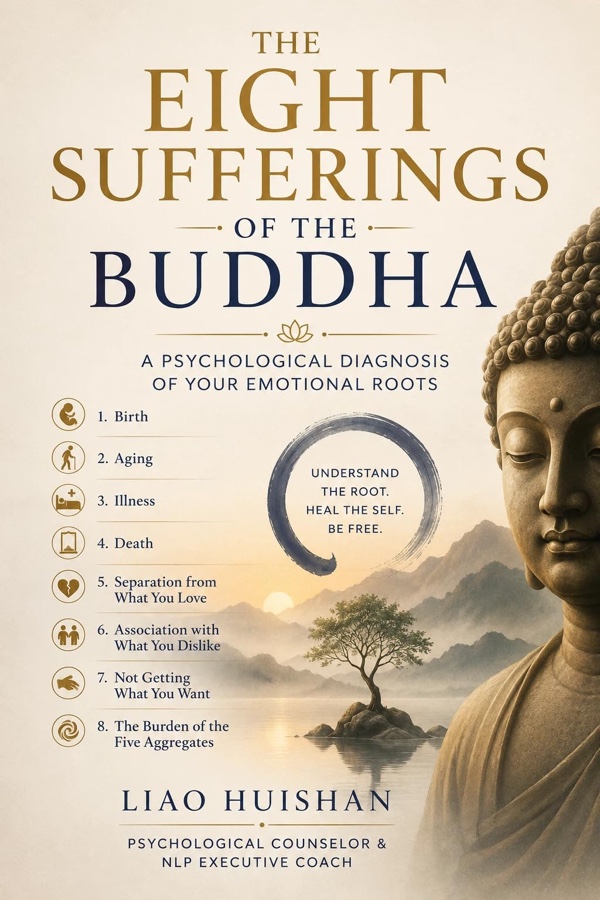
A book by Liao Huishan · Buddhist psychology
The Eight Sufferings of the Buddha: A Psychological Diagnosis of Your Emotional Roots
Why does the same kind of suffering keep returning in different forms?
This book approaches the traditional eight sufferings as a reflective map of ordinary life. Its purpose is not to label a reader or promise relief, but to help notice what changes beneath recurring disappointment, attachment, resistance, and separation.
Begin here when the pattern feels more important than the latest event. The book's lens is educational and contemplative: it can support personal reflection, but it is not a diagnosis or a substitute for professional care.
The book’s lens
What this book explores
These themes describe the book’s reflective focus; they are not clinical claims or a substitute for reading the retailer sample.
- 01
How birth, aging, illness, death, separation, unwanted contact, frustrated desire, and the instability of experience can be read as recurring human conditions.
- 02
How resistance and attachment can add a second layer of struggle to an already difficult moment.
- 03
How naming a pattern may create room for a more deliberate response without turning Buddhist ideas into a promise of cure.
Fit before purchase
Who may find it useful
- Readers who want an accessible bridge between Buddhist ideas and everyday emotional observation.
- People who recognize repeated patterns and want questions for journaling or quiet reflection.
- Readers willing to examine experience slowly rather than look for a quick motivational answer.
When to skip it: Skip this book if you want clinical treatment, a diagnostic manual, a guaranteed spiritual result, or a replacement for medical or psychological support.
Try the lens first
Three questions to carry
01Which part of the experience is painful, and which part comes from resisting what is already here?
02What am I trying to keep unchanged?
03Does this pattern appear under different names in different relationships or situations?
Read before deciding
Open the free companion essay.
Use the essay to test whether the book’s way of asking questions fits what you are carrying now. No purchase is required.
Use the lens before buying
Try the free reflection map.
Choose one of the eight patterns, separate the plain fact from the demand surrounding it, and name one proportionate next step. Nothing you write is submitted or saved by Quiet Compass.
If the fit is clear
Check the current Kindle edition on Amazon.
ASIN B0H5XQ82FN. Review the current format, availability, retailer sample, and terms on Amazon before deciding. This site does not reproduce live prices, ratings, or customer reviews.
Relationship disclosure
Two interests are disclosed.
Quiet Compass may earn an Amazon Associates commission from qualifying purchases, and the author may receive KDP royalties or eligible Kindle Unlimited reading revenue. The page is written to help readers assess fit before clicking, and it uses no incentive, customer review, star rating, live price, or sales claim.