A map of recurring situations
The traditional list of eight sufferings can sound remote when it is presented only as doctrine. Yet its categories point to experiences that repeatedly interrupt ordinary plans: the body changes, people leave, unwanted situations arrive, desired outcomes remain out of reach, and even a stable sense of who we are becomes difficult to hold.
The usefulness of the list is not that it makes every painful event identical. It gives us a wider frame. Instead of treating each disappointment as a private failure, we can notice that change, loss, friction, and frustrated control are built into human life.
Pain and the demand that pain should not exist
A difficult event may be unavoidable, but the mind often adds a second demand: this must not be happening to me. That demand can turn a limited experience into a struggle with reality itself. Buddhist psychology asks us to observe the extra layer without blaming ourselves for creating it.
This is not an instruction to approve of harm, stay in unsafe conditions, or refuse practical help. It is a way to distinguish what needs action from what is being intensified by resistance, prediction, comparison, or the wish for certainty.
- What part of this situation is happening now, and what part is a prediction?
- What am I trying to make permanent?
- Is there a practical action available before I continue the inner argument?
Why the categories overlap
Separation from what we love can activate frustrated desire. Contact with what we dislike can threaten identity. Aging can expose the wish to keep a former self. The categories overlap because experience overlaps; they are lenses, not boxes.
A reflective use of the framework begins with one recurring pattern. Naming every category at once is less useful than noticing the particular form of grasping or avoidance that appears in a real situation.
Use the map without turning it into a verdict
The eight sufferings are not proof that life is only suffering, and they are not a diagnosis of an individual. They are a reminder that a life organized around permanent control will repeatedly meet conditions it cannot control.
The gentler question is not, ‘How do I eliminate every difficult feeling?’ It is, ‘What becomes possible when I stop requiring this moment to confirm the identity, future, or certainty I wanted?’
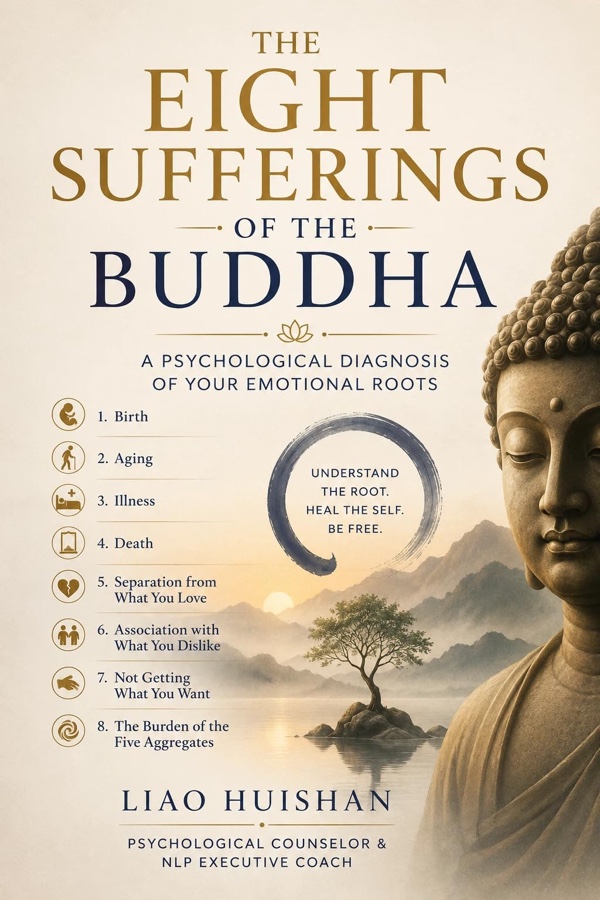
Continue with the book
The Eight Sufferings of the Buddha
If this question matches what you are exploring, the book develops the theme in a longer form. Check the current format, availability, and sample on the retailer page before deciding.
Explore the book and reader fit The book page includes a free companion route and a clearly disclosed Amazon option.