The first layer: what actually hurts
Pain and suffering are often treated as the same thing, but they do not always arrive together. Pain can be the first honest response to what happened: a relationship ended, a plan failed, the body changed, or someone we love is no longer here.
The first layer is usually simple even when it is difficult. We miss someone. We are afraid. We feel disappointed. We do not know what will happen next. These feelings are not moral failures. Trying to become ‘spiritual enough’ to avoid them can create a second problem: now we are in pain and ashamed that we are in pain.
A Buddhist psychology practice begins by naming this layer without exaggerating it and without pushing it away: this is grief; this is uncertainty; this is the pain of not getting what I hoped for. Clear naming is not resignation. It is the beginning of an accurate relationship with experience.
The second layer: the mind’s resistance
Resistance is what the mind adds when it insists that reality must not be the way it is. It often speaks in absolute sentences: this should not be happening; I cannot be okay unless this changes; I need an answer before I can move forward.
The mind uses these sentences to search for control. That is understandable, but it can turn one painful event into a continuous inner struggle. The event may have happened once; the mind can replay, prosecute, predict, and defend against it hundreds of times.
Acceptance does not mean approving of harm, abandoning boundaries, or refusing to improve a situation. It means ending the demand that reality first become different before we are willing to see it clearly.
A three-question practice
When a difficult emotion becomes heavy, pause long enough to separate the plain fact from the prediction, judgment, or demand surrounding it. The point is not to eliminate grief or fear. It is to recover a small space in which wise action is still possible.
- What is the plain fact of this moment, without predictions or interpretations?
- What am I demanding that this moment provide—certainty, permanence, fairness, reassurance, or a different past?
- What is one wise action available without that guarantee?
Use reflection without explaining pain away
Sometimes pain needs time, protection, practical support, or professional care—not a philosophical explanation. Reflection should never be used to excuse mistreatment, remain in unsafe conditions, or delay qualified help.
When the immediate situation is safe, one gentle question can change the quality of the moment: what hurts right now, and what part of the suffering comes from asking this moment to be something it is not? You do not need to force an answer. Noticing the difference is already a form of wisdom.
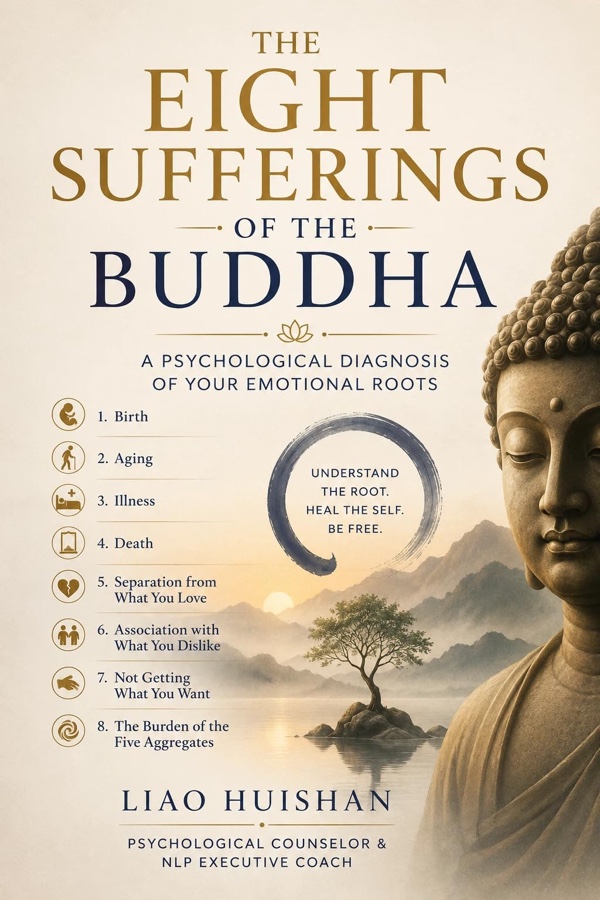
Continue with the book
The Eight Sufferings of the Buddha
If this question matches what you are exploring, the book develops the theme in a longer form. Check the current format, availability, and sample on the retailer page before deciding.
Explore the book and reader fit The book page includes a free companion route and a clearly disclosed Amazon option.